Materials for power electronics
Ferrites for Solid State Transformers
Losses, thermal behaviour and size determine every SST design. We develop ferrite materials that address exactly these three points – from the first feasibility study through to series production.
Send us your specifications Material datasheets
Where conventional transformers reach their limits
Solid state transformers (SST) become attractive wherever conventional 50/60 Hz transformers reach their limits – for instance at high power densities, under dynamic loads or in confined installation space. SST concepts combine power electronics with high-frequency magnetic components and thus open up new degrees of freedom in system design.
The magnetic materials largely determine losses, size and thermal behaviour. Blinzinger Elektronik develops ferrite materials designed specifically for the requirements of modern SST topologies.
Working on a specific SST design?
Send us your key figures – power, frequency, topology – and we will match suitable ferrite materials and core geometries to them.
Send specificationsBackground: how transformer design has evolved
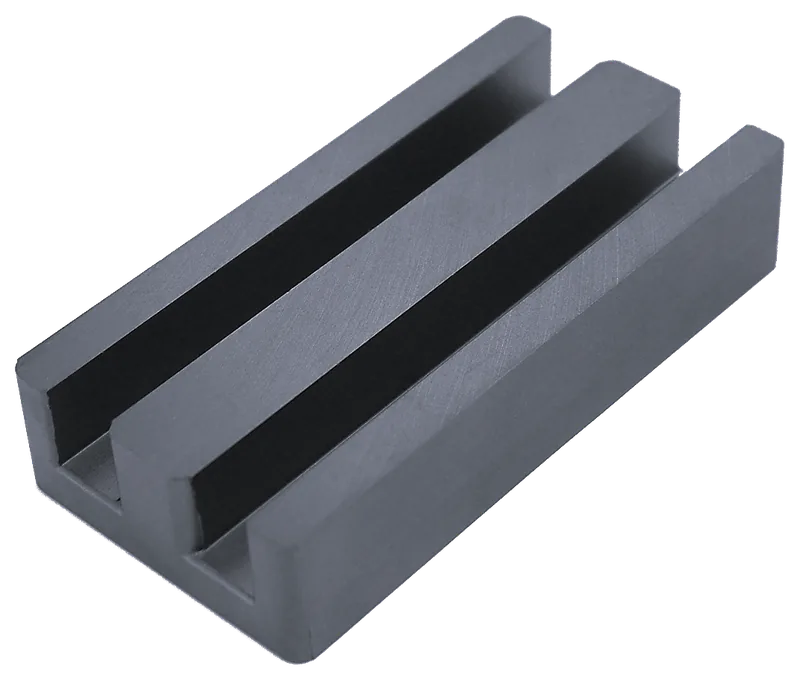
Conventional transformers are robust and well proven, but they reach their limits in terms of size, weight and controllability. As requirements grow through decentralised power generation, electric mobility and DC-based grids, power-electronic voltage conversion is moving further into focus.
SST typically operate in the kHz range. This allows transformers to be designed far more compactly – provided the magnetic materials keep frequencies and losses under control. The choice of ferrite therefore becomes a central design parameter.
Definition
What a solid state transformer is
A solid state transformer is a system consisting of power electronics, control and a high-frequency transformer. Voltage conversion takes place in several stages – AC/DC, DC/DC, DC/AC. Additional functions such as voltage regulation, reactive power management or galvanic isolation can be integrated.
The high-frequency transformer in the DC/DC stage largely determines efficiency, power density and thermal design. Its properties depend directly on the ferrite material used.
Innovation in transformer design
Fast semiconductors put pressure on the magnetics
Semiconductors based on SiC and GaN enable higher switching frequencies and steeper edges. This reduces the size of passive components, but places greater demands on the magnetic components.
As frequency rises, core losses typically increase as well. Without suitable ferrites, the efficiency gained from fast semiconductors is quickly offset by thermal problems and additional cooling effort.
Advantages of solid state transformers
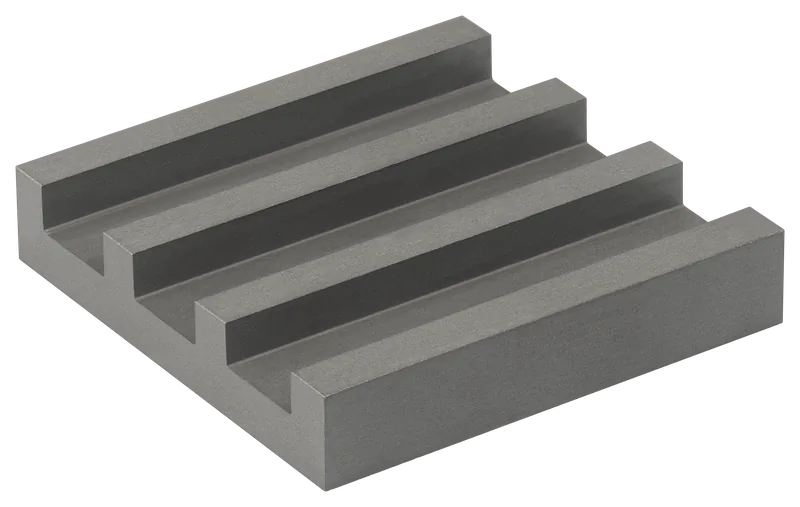
SST offer advantages above all at system level:
- higher power density through high-frequency operation
- flexible control of voltage and power
- bidirectional power flow
- integration of additional grid functions
These advantages can only be exploited in full if magnetic losses remain manageable and the components operate in a thermally stable way.
Blinzinger Elektronik ferrites
Three properties that matter in SST
Low core losses in the kHz range
Less dissipated power in the core – and therefore directly less cooling effort in the system.
Stable permeability
Predictable across a wide temperature range – and therefore easier to keep temperatures under control.
Sufficient saturation flux density
Additional freedom in the choice of switching frequency and more compact designs.
How this compares with standard ferrites
Standard ferrites are often optimised for classic applications such as smaller power supplies. In SST applications, typical limits then become apparent. Blinzinger Elektronik ferrites shift the usable operating range towards higher frequencies and temperatures.
| Criterion | Standard ferrite | Blinzinger Elektronik |
|---|---|---|
| Losses at higher frequencies | rise significantly | operating range shifted towards higher frequencies |
| Temperature behaviour | sensitive to change | stable permeability across a wide range |
| Power density | limited | designed for compact layouts |
| Design within a tight thermal budget | laborious | easier, even at high power levels |
Would you like a technical discussion?
If you have specific loss targets or temperature limits, we will look at which materials cover these boundary conditions sensibly.
Arrange a discussionApplications
Blinzinger ferrites in the solid state transformer
Increasing performance
Core loss accounts for a substantial share of the total losses of an SST. Reducing it has a direct effect on efficiency, cooling effort and installation space.
If core loss is reduced at a given frequency, either efficiency can be increased or the frequency raised further. Higher frequencies allow smaller transformers and therefore more compact systems.
Integration into modern power distribution systems
In typical SST topologies, magnetic components have to be reproducible and readily calculable. Our ferrites fit into existing design and simulation workflows:
- predictable loss behaviour
- material data for simulation and design
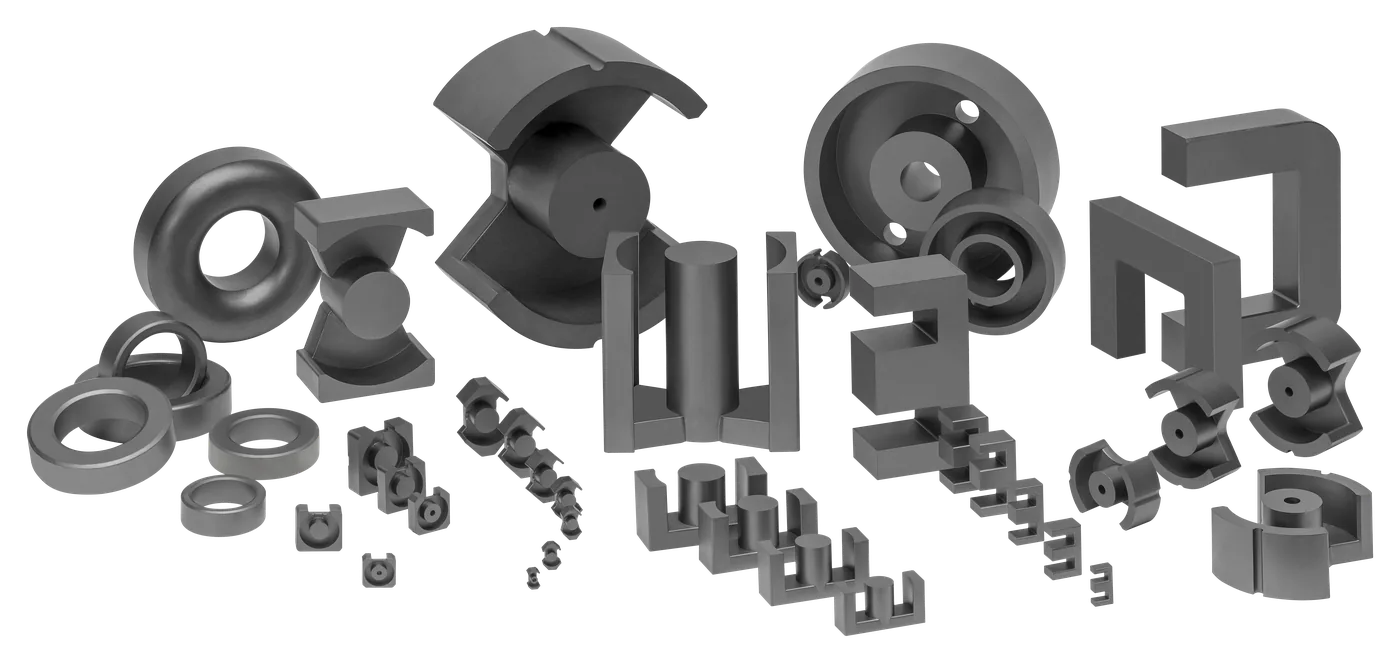
- availability of common core geometries
This reduces the number of iterations during prototyping and shortens time to market.
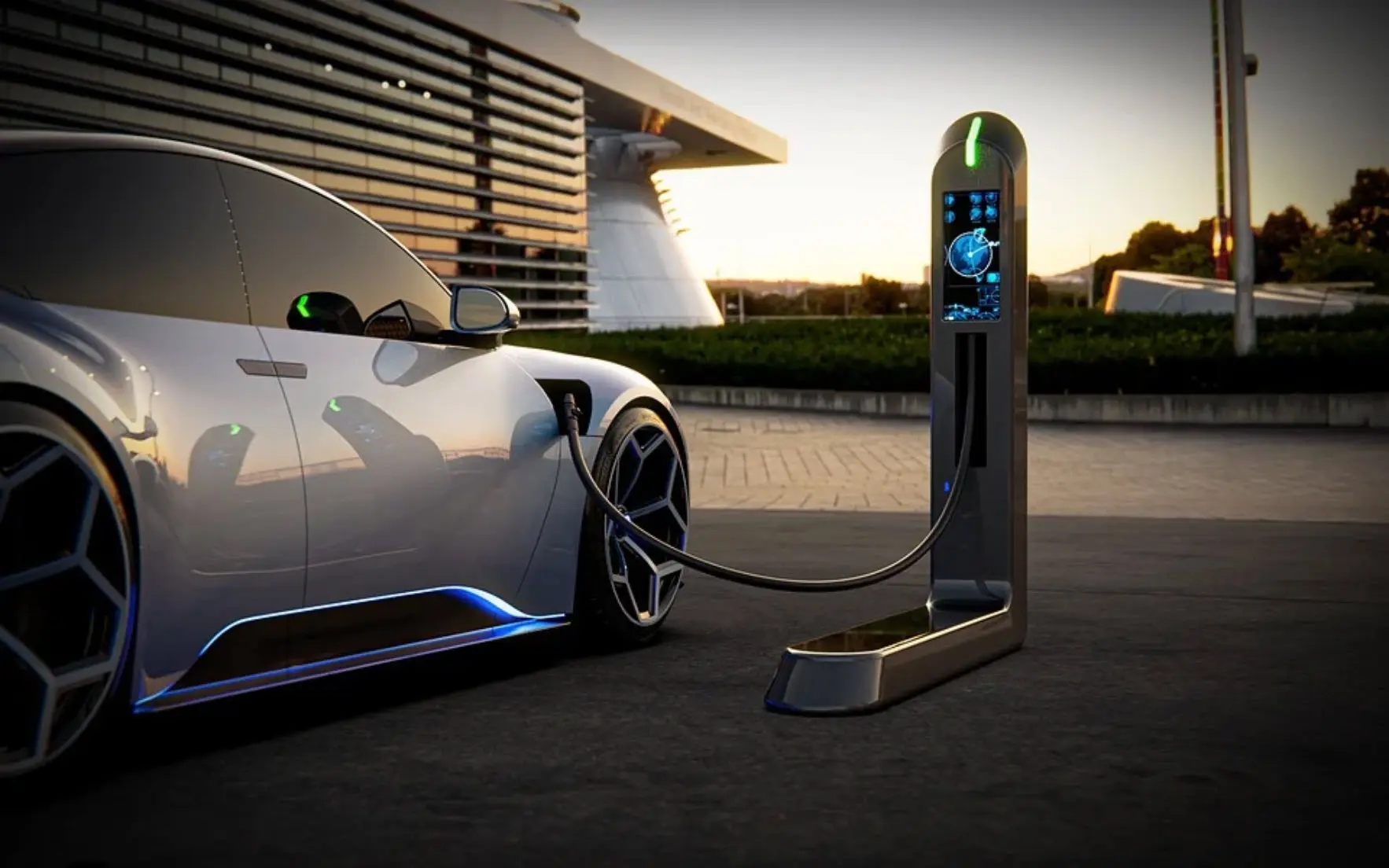 Charging infrastructure
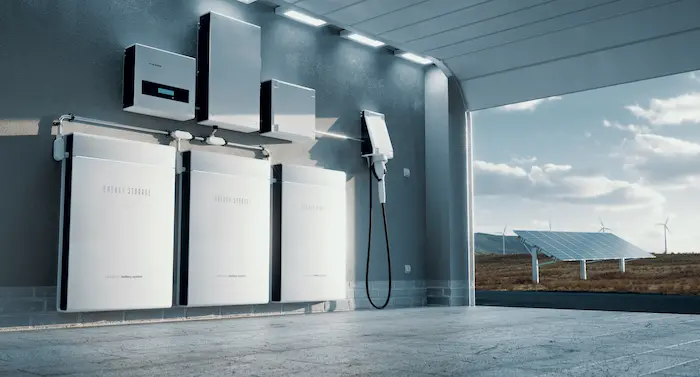 Renewables & DC grids
 Rail & industry
Next step
Request material datasheets or samples for your evaluation setups – so you can verify the behaviour in your own test rig.
Outlook
Future developments and trends
As switching frequencies and power densities rise, so do the demands on the materials. Development work is aimed among other things at further reducing frequency-dependent core losses, improving temperature stability and optimising materials for specific topologies and power ranges. Hybrid approaches combining different magnetic materials are also coming into focus, in order to create additional degrees of freedom on the material side.
SST are increasingly viewed as part of complex energy systems. The interaction of all components is correspondingly important – from semiconductors through ferrites to the control system. The ferrite is not an isolated detail here; it influences control behaviour, cooling and mechanical design. Selecting the material early in the project reduces later adjustments.
Summary of the benefits
Three points are decisive when designing solid state transformers: losses, thermal behaviour and size. Blinzinger Elektronik ferrites address precisely these aspects and provide a sound basis for efficient high-frequency transformers. The practical benefit shows in more stable operating conditions, reduced cooling effort and additional degrees of freedom in system design.
Anyone developing SST has to consider material, topology and semiconductors together. Ferrites are a central lever for efficiency and power density – not just a minor detail.
Frequently asked questions
Why are ferrites so important in SST?
They largely determine the losses and thus the efficiency, cooling effort and size of the high-frequency transformer.
What sets Blinzinger Elektronik ferrites apart from standard materials?
They are designed for high-frequency and power applications and show more favourable loss and temperature behaviour there.
Which applications is this relevant for?
For example charging infrastructure, industrial power supplies, DC grids and applications in the field of renewable energy.
Do better ferrites automatically improve the whole system?
Not automatically. They create better conditions, but they have to be used in a way that suits the topology and the control scheme.
Can existing designs be converted easily?
That depends on the design. In many cases an adaptation is possible, but it requires the magnetic design to be dimensioned again.
Let's talk about your SST project
Whether it is a new project or the optimisation of an existing design: we discuss suitable ferrite materials, core shapes and optimisation approaches – and, if you wish, support you from material selection through prototypes to series production.
Tell us the power, frequency and topology of your application in the form – and you will receive concrete proposals for ferrite material and core geometry.
Do you have any questions?
Write to us
or call us